
Why do the Balearics hold such a cult for the Serra de Tramuntana?
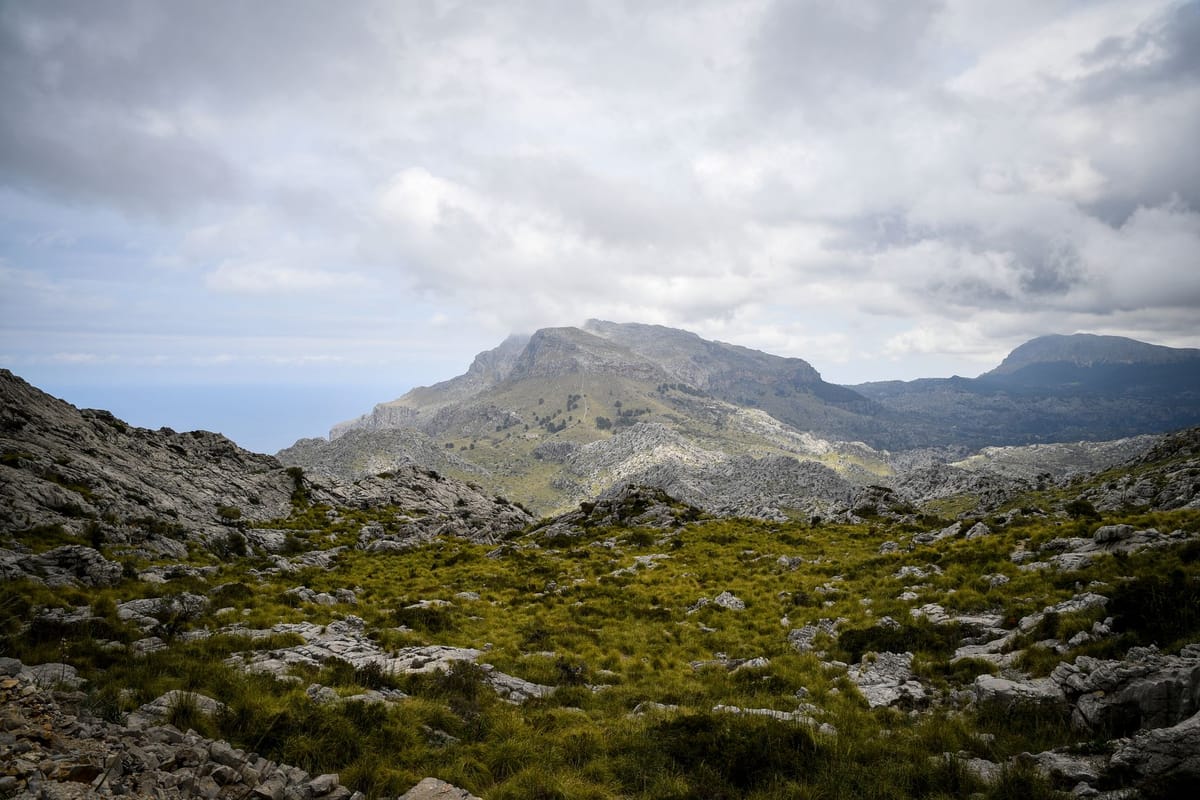
Because this mountain range in north-west Mallorca condenses, across a hundred kilometres of ridges, everything that makes up the island's soul: stone stacked without mortar, water captured drop by drop, villages clinging to the rock, and a slow way of life. UNESCO recognised it in 2011, listing it as a "cultural landscape" on the World Heritage List, a rare category that rewards not a backdrop but a thousand-year dialogue between people and their mountain. That is why, in the Balearics, the Serra de Tramuntana is not just a hiking destination: it is a mirror of identity.
What exactly did UNESCO list in 2011?
A landscape shaped by human hands, not a simple nature reserve. On 29 June 2011, the World Heritage Committee inscribed the "Cultural Landscape of the Serra de Tramuntana" (UNESCO file no. 1371), which runs along Mallorca's north-west coast and peaks at Puig Major, around 1,436 metres, the archipelago's highest summit. What the organisation recognises is centuries of farming in a resource-poor environment: a network of terraces, channels and mills born from the meeting of Arab hydraulic techniques and the possessions system (large estates) established after the 13th-century Christian conquest. In other words, UNESCO listed a body of know-how, not just a view.
Why is dry stone the backbone of the range?
Because it literally holds the mountain up. Pedra en sec, hand-cut stones fitted together with no mortar at all, forms the walls, terraces (marges), paths, bridges and huts that stripe the whole Tramuntana. You can walk it along the Ruta de Pedra en Sec, the long-distance GR221 trail, which now counts around 261 kilometres of waymarked path, close to 150 of them for the main route linking Port d'Andratx to Port de Pollenca, according to the Consell de Mallorca. Along the way you pass the quiet archaeology of a vanished rural world: the sitges (circular charcoal-burners' clearings), lime kilns, and neveres, the snow wells where ice was stored before the fridge arrived.
How was water tamed in the mountains?
Through a patient art of catching and channelling it, now tested by drought. The Serra's builders channelled torrents, powered mills and irrigated terraces through a network of canals, again inherited from Andalusi hydraulic engineering. The mountain still stores this water in the two Gorg Blau and Cuber reservoirs, which supply Palma. But their reserves are shrinking: in August 2024, the two reservoirs combined stood at just 36.5 percent of capacity, 15 points down on a year earlier, before falling by late October to 22 percent for Gorg Blau and 32 percent for Cuber. Taming water remains, eight centuries on, the Tramuntana's vital challenge.
Which villages are worth knowing?
Five perched towns sum up the range's spirit on their own, each with its own speciality. They are strung out between olive groves and sea cliffs, linked by the winding Ma-10 road and by sections of the GR221. These are villages where language, architecture and landscape echo each other, a relationship to the land also found in Balearic Catalan and its place names.
| Village or site | What you'll find |
|---|---|
| Valldemossa | The charterhouse where Chopin and George Sand spent the winter of 1838-1839, cobbled lanes and flower-covered terraces |
| Deia | The artists' village nestled between olive groves and sea, long the refuge of poet Robert Graves |
| Soller | The valley of orange and lemon trees, the tram and the historic train opened in 1912 |
| Fornalutx | Often voted "Spain's most beautiful village", painted tile roofs and stone stairways |
| Banyalbufar | Vine terraces facing the sea and the malvasia wine born of Arab irrigation |
| Sa Calobra and Torrent de Pareis | The corkscrew road and the spectacular gorge opening onto a cove enclosed by cliffs |
What did Chopin and George Sand come looking for in Valldemossa?
A mild climate for the composer's fragile health, and an interlude that marked the village forever. The couple arrived in Mallorca on 8 November 1838 and settled on 15 December in the Valldemossa charterhouse, where they stayed until 13 February 1839. The winter proved harsher and more solitary than expected, but Frederic Chopin composed a good part of his 24 Preludes, opus 28, there, while George Sand drew from it her account "A Winter in Majorca". Cells no. 2 and no. 4, with their Pleyel piano, are open to visitors today: the Tramuntana turned this intimate episode into a pillar of its cultural identity.
Why do Soller's orange trees have their own train?
Because the valley's gold was its citrus fruit, and it had to be got out of its isolated basin. In the late 19th century, the Soller valley was one of the Mediterranean's most productive citrus orchards, but its oranges and lemons only crossed the mountain passes on mule-back. Trade was so brisk it sent generations of sollerics to sell their fruit in France, in Lyon, Paris and Marseille, hence the modernist air of some of the town's houses. To open up the valley, a railway was built from 1907: the Ferrocarril de Soller was inaugurated on 16 April 1912, electrified in 1929, and carried its first tourists in 1930. This wooden train, still running today, glides slowly through the orchards, like a rolling museum of orange blossom.
Does overtourism threaten the Serra?
Yes, and authorities are starting to turn off the tap. The Balearics broke a historic record in 2024 with 18.7 million tourists (up 4.9 percent year on year), 82 percent of them foreign, Germans and Britons leading, according to Ibestat data. Mallorca alone welcomed 13.4 million of them. As a result, the Tramuntana's most fragile spots are moving to regulated access: a Consell de Mallorca report presented in October 2024 proposes closing Sa Calobra to private traffic, on the model already applied at Formentor, and the tunnel linking Sa Calobra to the Torrent de Pareis has been closed since 2 January 2024 for works. In early 2026, the Consell also unveiled a bill specific to the Serra de Tramuntana: temporary restrictions in case of saturation, a volunteer corps, and a ban on quad bikes on dirt tracks. On top of tourist pressure comes drought and the wildfire risk it worsens every summer: protecting the listed landscape now also means rationing it.
And the other islands, how do they protect their landscapes?
Every Balearic island has built its identity around a protection label. Menorca has been a UNESCO biosphere reserve since 7 October 1993; in 2019, its boundaries were extended to 514,485 hectares, making it, according to the Consell insular de Menorca, the Mediterranean biosphere reserve with the largest marine area. Further south, "Ibiza, biodiversity and culture" has been a World Heritage site since 4 December 1999, for its Dalt Vila fortified enclosure and for the posidonia seagrass beds carpeting the seabed between Eivissa and Formentera. The Tramuntana, then, is not an exception: it is the mountain version of the same archipelago-wide reflex, putting a landscape under glass so as not to lose it. This bond with the land and with local festivals feeds just as much into the sense of Balearic belonging.
Frequently asked questions
Can you visit the Serra de Tramuntana year-round?
Yes, but spring and autumn are the best seasons: summer concentrates heat, crowds and peak footfall, and some access points like Sa Calobra are now subject to restrictions. Check current closures with the Consell de Mallorca before you set off.
Do you need a car to explore the range?
Not necessarily. The Soller train and tram, a few bus lines, and above all the GR221 trail let you link the villages without a car, often simpler given the tightening parking rules in the towns.
Where can you see dry-stone construction up close?
Along sections of the GR221 between Valldemossa, Deia and Port de Soller, where walls, terraces and old charcoal-burning sites line the path. Banyalbufar's vine terraces offer a spectacular view of it facing the sea.
Can you visit the Valldemossa charterhouse?
Yes, the cells occupied by Chopin and George Sand during the winter of 1838-1839, with the Pleyel piano, are open to visitors within the charterhouse complex, on the Placa de la Cartuja.
Access rules and restrictions change; check current closures with the Consell de Mallorca before you travel. Information verified in August 2026. The Daily Baleares is an AI-assisted publication with human review.
Le Livre blanc 2026 de l'expat
NIE, empadronamiento, fiscalité, école, logement : tout l'essentiel pour s'installer, réuni dans un guide PDF. Laisse ton e-mail, on te l'envoie.
🎉 Et voilà ! Ton Livre blanc 2026 de l'expat s'ouvre ici :
Ouvrir le Livre blanc 2026Dernière étape pour rejoindre l'aventure : confirme ton inscription dans l'e-mail qu'on vient de t'envoyer.
Réagis à cet article