
Smoking on terraces and beaches in the Balearics: what does Spain's new anti-smoking law say, and from when?
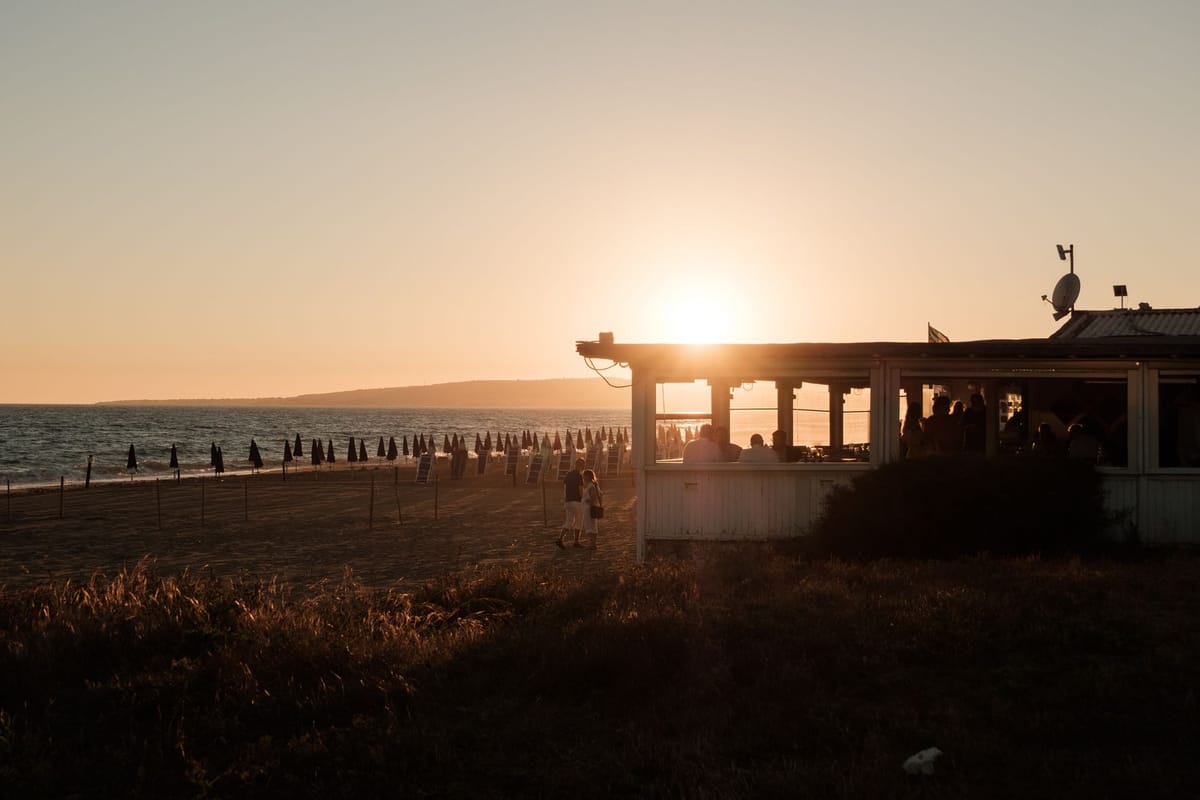
Not yet, but maybe soon: as of 1 August 2026, there is no new national ban on smoking on terraces or beaches in the Balearics. What the press calls the "new anti-smoking law" is, at this point, only a draft bill, approved by the Council of Ministers but not yet voted by Parliament or published in the official gazette. In other words, the current rules (Ley 28/2005) still apply. Here is what the text proposes if adopted as it stands, and what already exists on the ground in the Balearics.
Is the anti-smoking law already in force in the Balearics?
No. As of today (1 August 2026), nothing has legally changed. The Spanish Council of Ministers approved the draft bill amending Ley 28/2005 on 21 July 2026, then in a second reading on 25 July 2026. This is only a starting step.
To become applicable, the text still has to go through the full parliamentary process: passage through the Congress of Deputies, then the Senate, where it can be amended, before publication in the BOE (the official gazette). No definitive effective date exists for now. Several outlets mention a realistic timeline stretching to late 2026 or even early 2027. None of this is confirmed.
When would the law take effect if published?
According to the mechanism described by several sources, once the law is published in the BOE, it would take effect 20 days after publication, with an extra 2 months granted to businesses to put up the compulsory signage. But be careful: this countdown can only start after a vote and a publication that have not happened. Until those steps are cleared, you can rely on the current rules.
Where would smoking be banned if the bill passed?
The text would sharply widen the list of smoke-free places, terraces and beaches included. Here is a summary of what the bill proposes (not current law):
| Place affected (if adopted) | What the text proposes |
|---|---|
| Bar and restaurant terraces | A total ban on smoking and vaping, including uncovered outdoor areas (ending the current exception for terraces open or enclosed by at most two walls). |
| Beaches (coastal and river), shared-use pools, outdoor sports facilities | Banned. |
| Bus stops and shelters, even outdoors | Banned. |
| School playgrounds, university campuses, outdoor education facilities | Banned. |
| A 15-metre radius around the entrances of public buildings, hospitals and health centres, social and cultural centres, schools and universities, museums, libraries, sports facilities, children's playgrounds | Banned within the perimeter. |
| Performance venues (theatres, cinemas, concerts) and venues for playing or watching sport | Banned. |
The bill also treats e-cigarettes (with or without nicotine), plant-based smoking or inhaling products, shishas and hookahs, and devices that mimic the act of smoking, the same as regular tobacco.
Would beaches and beach bars really be affected?
Yes, and that is precisely what is fuelling the debate. According to sector coverage, chiringuitos and beach bars, hotels and aparthotels with shared areas would be covered by the ban on their terraces. Only strictly private terraces would be excluded.
What fines are being considered (and why caution is warranted)?
Note: the figures circulating are not final. They vary by source and relate to a text that has not been voted on. Treat them as indicative ranges, not fines already applicable:
- Minor offences: 30 to 200 euros, capped at 600 euros (notably for minors).
- Serious offences: 601 to 10,000 euros. This is the tier corresponding to the 10,000 euros cited by the CAEB employers' body for businesses that fail to enforce the ban on their terrace.
- "Very serious" offences: 10,001 to 600,000 euros, likely reserved for the most severe cases involving businesses or organisers, not individuals.
- Minors caught smoking or vaping in the street: a fine of up to 600 euros, with parents or guardians subsidiarily liable, convertible into community service.
A figure of 750 euros also circulates for other Spanish cities (San Sebastian, Tenerife, Barcelona), but it is not confirmed for any Balearic municipality: do not take it at face value here.
Are some Balearic beaches already "smoke-free"?
Yes, and it is a completely separate scheme from the national law. Since 2019, a voluntary regional programme run by the Balearic Directorate-General for Public Health (CAIB), coordinated with coastal municipalities, has existed: "Platges sense fum" / "Playas sin humo".
Key point: this programme relies on voluntary participation by municipalities, it is not a legal obligation. So there is no automatic penalty, unless a municipality has adopted its own local ordinance (the programme provides a template). Around 52 "smoke-free" beaches were counted in the Balearics at the end of 2025-2026 according to local press (a figure worth confirming), and around forty beaches in Mallorca plus additional beaches in Ibiza, Menorca and Formentera according to the Majorca Daily Bulletin.
Which municipalities and beaches take part?
Among the participating municipalities in Mallorca cited by the Majorca Daily Bulletin: Alcudia, Andratx, Arta, Calvia, Estellencs, Felanitx, Manacor, Palma, Pollenca, Santa Margalida, Santanyi, Ses Salines, Soller and Son Servera. A few concrete examples:
- Palma: Cala Estancia beach and the Es Molinar bathing area.
- Calvia: Es Carregador (Palmanova), Santa Ponsa beach, La Romana beach (Peguera).
- Ibiza: the urban beach of Santa Eularia des Riu and Talamanca beach.
Worth being honest about: no source confirms that a Palma or Calvia municipal ordinance would go further than the future national law, or a specific fine amount tied to a particular Balearic municipality.
What do the Balearics' hoteliers and restaurant owners say?
The sector, mostly concentrated in Mallorca, opposes the bill. PIMEM Restauracion (Balearics) rejects it, calling it "disproportionate, punitive and out of touch with the sector's economic reality", and fears an impact on footfall, jobs and the viability of businesses.
CAEB Restauracion, for its part, opposes the total ban on terraces, arguing it would strip Mallorca of competitiveness as a tourist destination. For the organisation, the terrace is not an accessory space for Mallorcan hospitality, it is part of the tourism product itself. CAEB also considers it unworkable to shift onto businesses the responsibility for enforcing the ban against a continuous flow of customers, with fines of up to 10,000 euros for the behaviour of third parties.
On the economic backdrop, CAEB notes that tourism accounts for more than 40 percent of the Balearics' regional GDP, that Mallorca concentrates 71 percent of visitors and 72 percent of the archipelago's tourist spending, and that the region welcomed more than 19 million tourists in 2025. Media coverage has been extensive, including the testimony of a Palma restaurant owner who, by personal choice, has already banned smoking on his terraces for four years.
A point of honesty: no official reaction specific to the hospitality sector in Menorca, Ibiza or Formentera has been found at this stage, coverage being concentrated on Mallorca. If you are planning a night out instead, our guide to Ibiza's clubs stays current.
Frequently asked questions
Can you smoke on a bar terrace in the Balearics today?
Yes, under the current terms of Ley 28/2005. The total terrace ban is only a bill not yet voted on as of 1 August 2026. Nothing has legally changed for now.
Do you risk a fine on the beach if you smoke?
Under national law, no, it does not exist yet. However, some Balearic beaches are already "smoke-free" through the voluntary "Platges sense fum" programme: a penalty is only possible if the municipality has adopted its own local ordinance.
From when would the new law apply?
No date is confirmed. The text must first be voted through Congress, then the Senate, and published in the BOE. Only then would it take effect 20 days after publication, with 2 more months for signage. Some sources mention late 2026 or early 2027, with no guarantee.
Would e-cigarettes be covered?
Yes, if the bill is adopted as it stands: it treats e-cigarettes (with or without nicotine), shishas and hookahs, plant-based smoking or inhaling products, and devices mimicking the act of smoking, the same as tobacco. But again, this is not yet in force.
Are the announced fine amounts final?
No. Figures vary between outlets and relate to a text that has not been voted on and can still be amended. Treat them as indicative ranges, not applicable penalties.
Information verified as of 1 August 2026, editorial responsibility, and updated in August 2026. The Daily Baleares is an AI-assisted publication with human review.
Le Livre blanc 2026 de l'expat
NIE, empadronamiento, fiscalité, école, logement : tout l'essentiel pour s'installer, réuni dans un guide PDF. Laisse ton e-mail, on te l'envoie.
🎉 Et voilà ! Ton Livre blanc 2026 de l'expat s'ouvre ici :
Ouvrir le Livre blanc 2026Dernière étape pour rejoindre l'aventure : confirme ton inscription dans l'e-mail qu'on vient de t'envoyer.
Réagis à cet article