
Who is Miquel Barceló, the Mallorcan painter behind the UN dome and Palma cathedral?
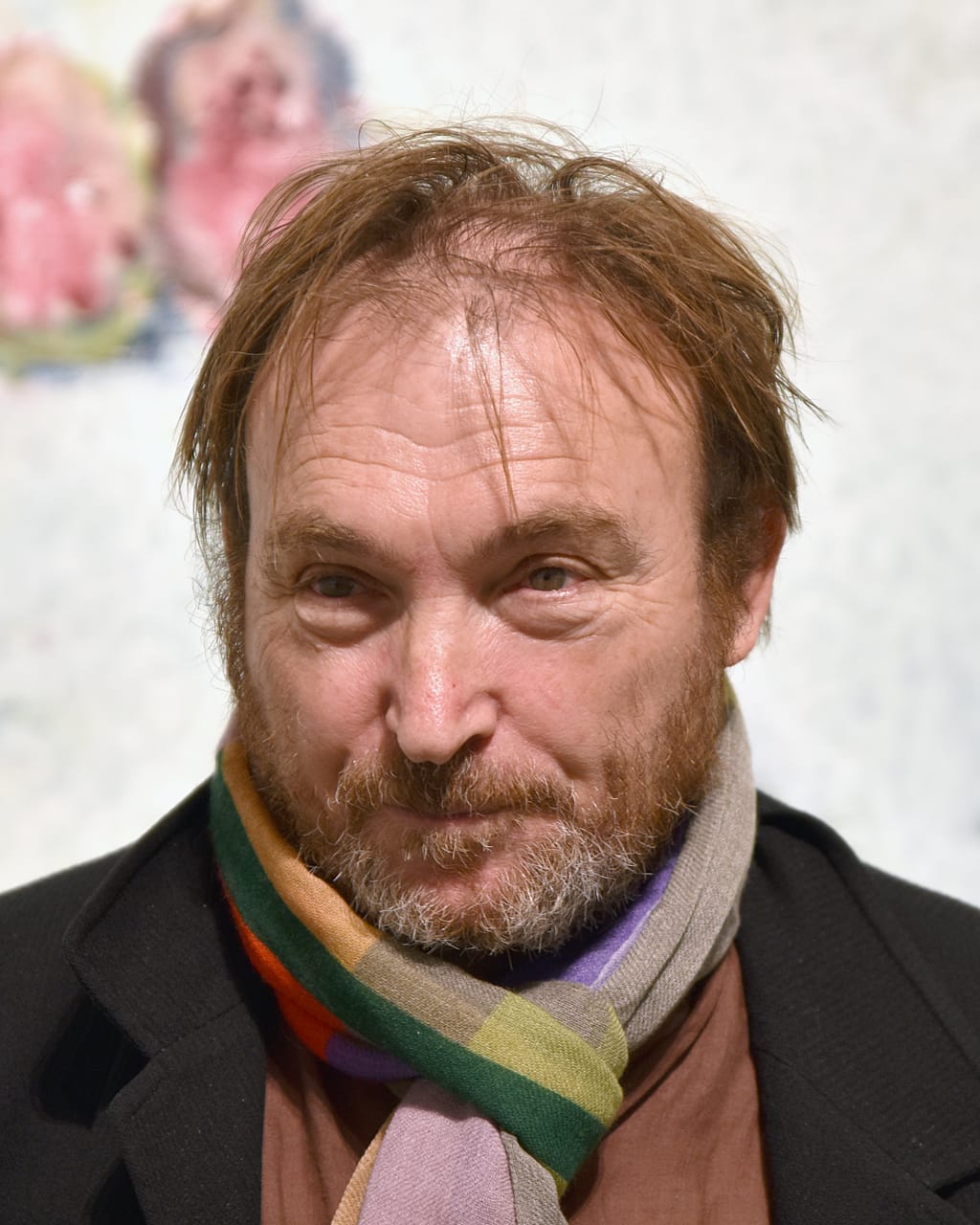
Miquel Barceló Artigues was born on 8 January 1957 in Felanitx, a town in inland Mallorca. His mother, Francisca Artigues, painted landscapes as an amateur, which put the young Miquel in touch with colour and brushes from an early age.
He first studied at Palma's School of Decorative Arts, from 1972 to 1973, before enrolling in 1974 at the Sant Jordi School of Fine Arts in Barcelona, which he left after a few months. Back in Mallorca, he joined the avant-garde collective Taller Llunàtic. His work from that period owes much to American abstract expressionism, Jackson Pollock in particular, as well as to baroque masters such as Velázquez and Rembrandt.
International recognition came in 1982, when he was invited to exhibit at Documenta VII in Kassel, Germany, selected by curator Rudi Fuchs. He was only 25 at the time. In 1986 Spain awarded him the National Prize for Plastic Arts.
From 1988 onward, Barceló began spending regular stretches of time in Mali, a country that reshaped his painting: he experimented there with local pigments and sediments, clay, earth and ash, and set up a studio in Ségou where he spent several months a year for years. In an interview published on 27 January 2015 by journalist Elena Cué, he described life there: painting, he said, comes from a kind of lack that everyday life in Mali simply does not leave room for.
Between 2001 and 2006, Barceló devoted several years to the Chapel of the Santíssim in Palma cathedral (La Seu), according to an academic article published in the journal Actas de Arquitectura Religiosa Contemporánea. He created a polychrome ceramic fresco of roughly 300 square metres depicting the miracle of the loaves and fishes. The work was completed and consecrated in 2007.
He then took on an even larger project: the dome of the Human Rights and Alliance of Civilisations Room at the Palais des Nations in Geneva, the UN's European headquarters. Inaugurated on 18 November 2008 in the presence of King Juan Carlos and Queen Sofía, the piece covers around 1,400 square metres of multicoloured stalactite forms, at a cost of roughly 20 million euros funded by the Spanish state.
On 12 June 2003, the jury of the Prince of Asturias Award for the Arts named him laureate, beating composer Cristóbal Halffter and architect Rafael Moneo in the vote.
More than two decades on, Barceló remains active. Since 11 June 2026, the Artur Ramon gallery in Barcelona has been showing Grabados de Barcelona, his first exhibition of unpublished work in a Barcelona gallery since 1990: around 30 of the roughly 70 engravings he made in the city between 2010 and 2026, produced with printers Joan Roma and Takeshi Motomiya and covering subjects from marine life to woodcut portraits of writers such as Gérard de Nerval and Vladimir Nabokov. The show runs until 9 October 2026.
Photo credit: portrait of Miquel Barceló, photographed on 3 October 2025 in Prague at the opening of the exhibition Miquel Barceló y los mundos escritos at the DOX centre, by Jindřich Nosek (NoJin), CC BY 4.0 licence, Wikimedia Commons.
This portrait was prepared with AI assistance, then cross-checked, verified and edited by our editorial team, who take full editorial responsibility for it. Facts verified on 18 August 2026.
Le Livre blanc 2026 de l'expat
NIE, empadronamiento, fiscalité, école, logement : tout l'essentiel pour s'installer, réuni dans un guide PDF. Laisse ton e-mail, on te l'envoie.
🎉 Et voilà ! Ton Livre blanc 2026 de l'expat s'ouvre ici :
Ouvrir le Livre blanc 2026Dernière étape pour rejoindre l'aventure : confirme ton inscription dans l'e-mail qu'on vient de t'envoyer.
Réagis à cet article