
Who is Maria del Mar Bonet, Mallorca's voice of the Nova Cançó?
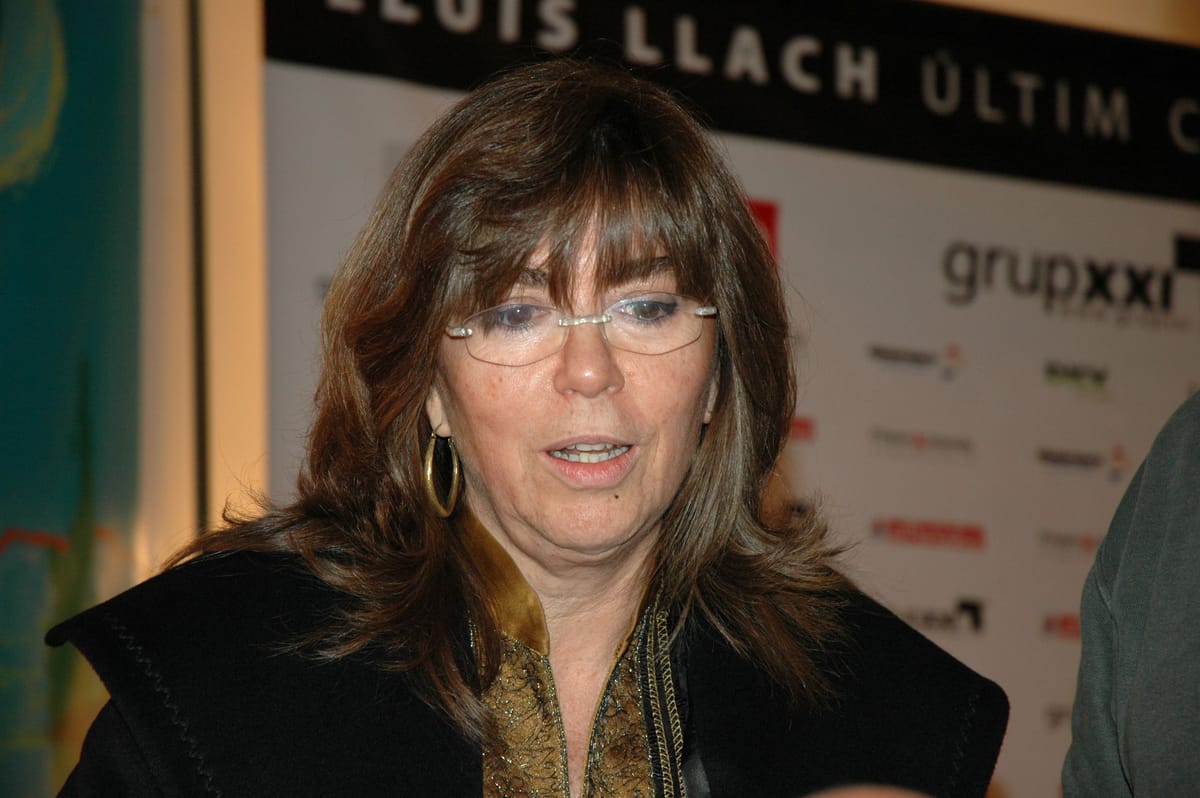
Maria del Mar Bonet i Verdaguer was born on 27 April 1947 in Palma, on the island of Mallorca. Her older brother, Joan Ramon Bonet, was already singing in the revival movement for song in Catalan as she grew up, an influence that would shape her whole artistic life.
In 1967 she left for Barcelona intending to study ceramics. The city's cultural ferment, and time spent around writers such as Raimon and Lluís Llach, pulled her back toward singing: that same year she joined Els Setze Jutges, the founding collective of the Nova Cançó, the movement that put the Catalan language back at the centre of song under Franco's dictatorship.
Her first records, Cançons de Menorca (1967) and Què volen aquesta gent? (1968), established her as one of the movement's most persistent voices. Over the following decades she released albums blending traditional Balearic song, Catalan poetry set to music and Mediterranean influences: Alenar (1977-1978), Anells d'aigua (1985-1986), Gavines i dragons (1987-1988) and, more recently, Ultramar (2017).
That body of work also carries the mark of her attachment to Mallorca's environment. In July 1977, when the occupation of the islet of Sa Dragonera, off Andratx, became the Balearic Islands' first major environmental mobilisation against a property development, she was among the public figures who backed the cause, alongside painter Joan Miró; she later dedicated the song «Sa Dragonera», on the album Gavines i dragons, to the islet. On 14 February 2004 she was also among the artists supporting a demonstration in Palma that drew around 50,000 people in defence of the coastline and areas such as the Es Trenc dunes, then threatened by development plans.
Her career has been recognised with the Creu de Sant Jordi from the Generalitat de Catalunya in 1984, the international grand prize of the Académie Charles Cros in Paris the same year, the Premi Nacional de Música in 1992, the Gold Medal of Merit in Fine Arts in 2011, an honorary doctorate from the University of the Balearic Islands in 2015, and the Premi Nacional de Cultura in 2020.
Asked in October 2024 by outlet Castelló Notícies about her relationship with the Catalan language, she explained: «No defenso la llengua per política, sinó perquè és l'ànima del meu país», meaning she does not defend the language out of political calculation, but because it is the soul of her country.
Mallorca remains her creative home base. Her new album, L'aigua no cansa, was conceived, written and recorded entirely on the island, at the Estudis Swing in Palma, in January and February 2026. She is set to present it live at the Auditorium de Palma on 27 November 2026, as part of a tour marking fifty years on stage.
Photo credit: portrait of Maria del Mar Bonet, photograph by Martin E. Beranguer, Creative Commons BY-SA 3.0 licence, Wikimedia Commons.
This portrait was prepared with AI assistance, then cross-checked, verified and edited by our editorial team, who take full editorial responsibility for it. Facts verified on 18 August 2026.
Le Livre blanc 2026 de l'expat
NIE, empadronamiento, fiscalité, école, logement : tout l'essentiel pour s'installer, réuni dans un guide PDF. Laisse ton e-mail, on te l'envoie.
🎉 Et voilà ! Ton Livre blanc 2026 de l'expat s'ouvre ici :
Ouvrir le Livre blanc 2026Dernière étape pour rejoindre l'aventure : confirme ton inscription dans l'e-mail qu'on vient de t'envoyer.
Réagis à cet article