
Where to see the oldest olive trees in the Balearics
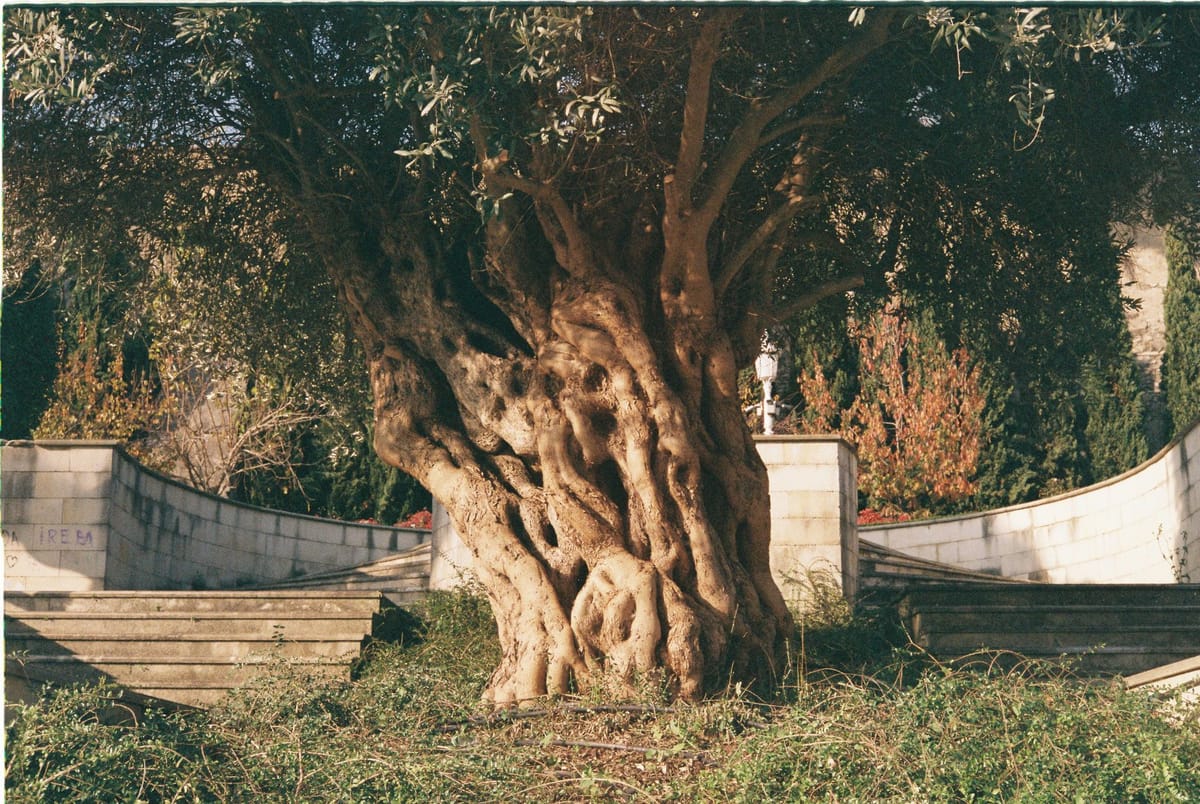
If you are looking for genuinely thousand-year-old olive trees in the Balearics, the honest answer is: they are rare, and their age remains a hypothesis. Contrary to popular Mallorcan belief, the vast majority of olive trees in the Serra de Tramuntana are not a thousand years old but closer to 500 on average, with mass planting dating to the 16th century (with the first traces in the 15th), according to the regional authority's protected-designation records. Only a few isolated, remarkable specimens, such as the famous Can Det olive, would approach or exceed 1,000 years, and even then: these are expert estimates, never confirmed by coring or scientific dating. Here is where to see them, island by island.
Why aren't the Tramuntana olive trees really a thousand years old?
The legend of "thousand-year-old" olive trees is part of Mallorcan folklore, but it mostly captures the imagination rather than the orchard as a whole. Regional data puts the average age of the Serra's traditional olive trees at around 500 years, with intensive planting in the 16th century. What made this cultivation possible were the dry-stone terraces (bancals), which let olives grow on terrain that would otherwise be unworkable. Mallorcan olive oil, in fact, made up more than 65 percent of the island's exports in the 17th, 18th and 19th centuries. In other words, the twisted trees you pass while hiking are old and magnificent, but their great age is usually measured in centuries, not millennia.
Where is the Can Det olive tree, Mallorca's most famous?
The most famous stands on the Can Det estate, in the Soller valley, straddling Soller and Fornalutx (two neighbouring municipalities in the Serra de Tramuntana). In 2020, it was voted "Best Monumental Olive Tree in Spain" by the AEMO (the Spanish association of olive-growing municipalities), whose jury was chaired by Dr Angjelina Belaj, head of the world olive germplasm bank at IFAPA in Cordoba. Its trunk measures more than 6.5 metres in circumference, and it belongs to the native Empeltre mallorquina variety. According to the AEMO, its age "probably exceeds 1,100 years", with a hypothesis that it was planted by Muslims in the 9th century: treat this as an expert estimate, not a scientifically dated fact. The estate is run by the Deya Canals family, who operate the island's last traditional oil mill there.
The good news: you can see it. Can Det is open to visitors by reservation (address C/Ozonas 8, 07100 Soller; phone 639 350 577). It is a chance to see a still-working olive mill at the same time.
Can Det olive tree, Soller
Can you see an old olive tree in Palma without leaving the city?
Yes, and it is one of the most accessible in the whole archipelago. On Placa de Cort, in front of Palma's town hall, stands the Olivera de Cort, estimated at 500 to 600 years old. Its trunk measures 7 metres in circumference and it stands 6 metres tall, and it is protected under the Balearic law on singular trees (Law 6/1991). One thing worth knowing: this olive tree does not come from the Tramuntana at all. It was transplanted in 1989 from the Pedruixella Petit estate, in Pollenca, a gift from Jaime Batlle Manresa. So it is a "travelling" tree, one that has become a symbol of the city over the years.
Olivera de Cort, Palma
Are there remarkable olive trees on the other islands?
Yes, even though Mallorca has the best-known ones. In Ibiza, s'Olivera de n'Espanya, near Sant Carles, is presented as the largest olive tree in Spain: protected since 2001, it reaches 12 metres tall. The island has 22 catalogued singular trees, against 6 in Formentera. In Menorca, three ullastres (wild olive trees) line the airport road; they are protected and their uncertified age is estimated by local sources at more than 1,000 years, a figure to treat cautiously given the lack of formal dating. As for Formentera, no individually remarkable olive tree has been identified there, beyond the generic mention of its 6 singular trees.
s'Olivera de n'Espanya, Sant Carles (Ibiza)
How can you see these olive trees while hiking?
If you want to meet them in their setting rather than in isolation, the Serra de Tramuntana is your playground: a UNESCO World Heritage cultural landscape since June 2011, covering 63,084 hectares (including 1,123 marine) over 90 km in length. Two routes come up often, worth treating as suggestions rather than officially waymarked trails for this purpose. The Cami de s'Arxiduc, between Valldemossa and Deia, was laid out by Archduke Louis Salvator of Austria in the late 19th century; it runs alongside olive terraces and takes 3 to 5 hours to complete. The Ruta Verde del Olivo starts from the main square in Caimari. Bring good shoes, water, and avoid the hottest hours.
What is changing for these olive trees in 2026?
Worth watching: the Consell de Mallorca is preparing a specific law for the Serra de Tramuntana, presented in February 2026. Among its measures, the creation of a census and catalogue of monumental olive trees and holm oak groves, which would become a priority for subsidies. A step towards better protecting, over time, these giants that legend had already crowned as ancient.
| Olive tree | Location | Estimated age | Worth knowing |
|---|---|---|---|
| Can Det olive | Soller / Fornalutx (Mallorca) | 1,100 years (AEMO hypothesis, undated) | Best monumental olive tree in Spain 2020, trunk over 6.5 m, visit by reservation |
| Olivera de Cort | Placa de Cort, Palma | 500 to 600 years | Transplanted in 1989 from Pollenca, 7 m trunk, 6 m tall, right in the city |
| s'Olivera de n'Espanya | Sant Carles (Ibiza) | Undated | Presented as the largest in Spain, 12 m tall, protected since 2001 |
| Ullastres of Menorca | Airport road | Over 1,000 years (estimate, uncertified) | Three protected wild olive trees |
Frequently asked questions
Are the Balearic olive trees really a thousand years old?
Not for the vast majority. According to regional records, the average age of the Serra de Tramuntana's traditional olive trees is around 500 years, with mass planting dating to the 16th century. Only a few isolated specimens, like the Can Det olive, would approach or exceed 1,000 years, and even these ages remain unconfirmed estimates.
What is Mallorca's most famous olive tree?
The Can Det olive, in the Soller valley, voted Spain's best monumental olive tree in 2020 by the AEMO. Its trunk exceeds 6.5 metres in circumference and it belongs to the native Empeltre mallorquina variety.
Can you visit the Can Det olive tree?
Yes, by reservation. The Can Det estate is at C/Ozonas 8, 07100 Soller, and can be visited by calling 639 350 577. You will also see the island's last traditional oil mill there.
Where can you see an old olive tree easily, without hiking?
In Palma, on Placa de Cort, in front of the town hall. The Olivera de Cort, aged 500 to 600 years, has stood there since being transplanted in 1989 and is perfectly accessible right in the city.
Are monumental olive trees protected?
Yes, several already are under Law 6/1991 on Balearic singular trees. And in February 2026, the Consell de Mallorca presented a Serra de Tramuntana bill that includes a catalogue of monumental olive trees, prioritised for subsidies.
Ages given for individual trees are expert estimates, not scientifically dated facts unless stated. Information verified in August 2026. The Daily Baleares is an AI-assisted publication with human review.
Le Livre blanc 2026 de l'expat
NIE, empadronamiento, fiscalité, école, logement : tout l'essentiel pour s'installer, réuni dans un guide PDF. Laisse ton e-mail, on te l'envoie.
🎉 Et voilà ! Ton Livre blanc 2026 de l'expat s'ouvre ici :
Ouvrir le Livre blanc 2026Dernière étape pour rejoindre l'aventure : confirme ton inscription dans l'e-mail qu'on vient de t'envoyer.
Réagis à cet article